SPC Flooring Upstairs: Plan, Budget & Prep Like a Pro
We recently helped a homeowner plan SPC vinyl plank for an upstairs and stairs. Here’s how to budget, choose thickness, and prep for a smooth second-floor install.
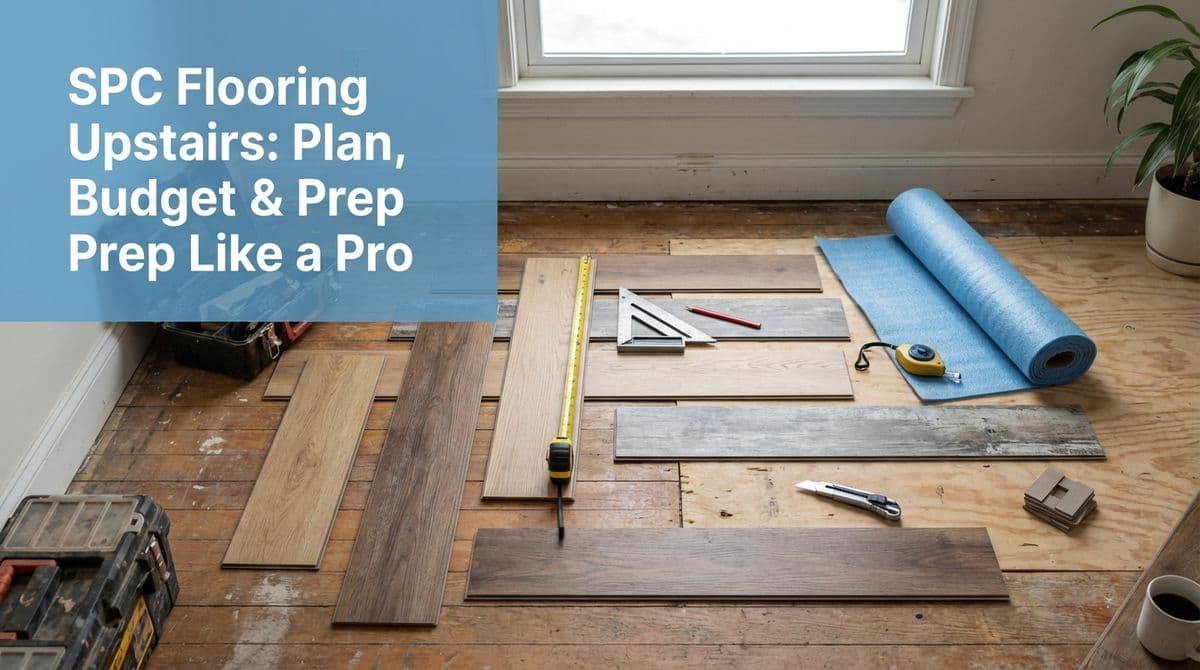
We recently got a call from a homeowner — let’s call him Mark — who had just bought a house where the first floor already had SPC vinyl plank installed. He loved the look and durability and wanted to match it upstairs, including the stairs and all the bedrooms.
His big questions were the same ones we hear all the time: “How do I budget this? What thickness should I use? What about the stairs and baseboards? And can you give me a rough estimate before I even close on the house?”
In this post, I’ll walk you through how we guided Mark, and how we usually help homeowners plan, budget, and prep for a second-floor SPC vinyl plank installation.
Step 1: Decide Who’s Supplying the SPC Flooring
With Mark, the first thing we cleared up was who would handle the material. His downstairs already had SPC installed, and he wanted the upstairs to match as closely as possible. He wasn’t sure where the previous owner had purchased it, just that it should be easy to find in the area.
We offered him two options we offer most customers:
- We supply the material: You pick the color and style, and we handle ordering, pickup, and delivery. There’s usually a small markup for material.
- You supply the material: You source the exact product you want, and we charge labor only. If needed, we can even pick it up for you for a small fee.
If you’re trying to match existing SPC, it’s often better for you to track down the exact brand and color (ask the seller, look for leftover boxes, or check any paperwork). Once you’ve got that, we’re happy to quote labor only and help coordinate pickup.
Step 2: Choose the Right SPC Thickness for Upstairs
Mark’s other question was about thickness. SPC comes in different thicknesses — for example, 4.5 mm, 5.5 mm, 6.5 mm, even 8 mm for heavier-duty applications. The price changes with thickness and quality.
Here’s what we usually recommend for a second floor:
- 4.5 mm: Budget-friendly, OK for light traffic, but not our first choice for a whole second floor.
- 6.5 mm: Our most common "sweet spot" for homes — good durability, feels more solid underfoot, and handles normal upstairs traffic well.
- 8 mm: Premium feel and sound, great in high-traffic or luxury applications, but costs more per square foot.
Unless we’re matching an existing product, we typically guide customers like Mark toward a mid-range 6.5 mm plank for upstairs. It balances cost, comfort, durability, and sound dampening nicely.
Step 3: Budgeting Labor for Upstairs SPC Flooring
Mark was still a couple of weeks away from closing and wanted a rough estimate based on the square footage he had from the seller. That’s something we can normally do, as long as you understand the final price may change once we actually see the job.
For his upstairs project (about 1,500 square feet), here’s how we broke it down:
- Per-square-foot labor for SPC: We quoted him $3.45 per square foot. That included:
- Removing and hauling away existing flooring
- Basic floor prep
- Leveling/patching as needed (materials for patching included)
- Installing the SPC plank
- Stairs priced separately: He had 16 steps, and we quoted a flat price per step (we don’t double-charge the square footage and the stair price).
Every home is different, but this gives you a sense of how upstairs SPC labor is usually structured: one rate for flat areas, a separate per-step cost for stairs, plus any trim or baseboard work if needed.
Step 4: Handling Stairs with SPC Vinyl Plank
Stairs were a big concern for Mark. He wanted the staircase to match the upstairs flooring, and he wasn’t sure how that affected pricing.
When we price stairs, we look at:
- Number of steps: Mark had 16.
- Type of nosing: Whether we’re using matching stair noses from the manufacturer or custom solutions.
- Existing stair material: Carpet removal, condition of treads, and any repairs needed.
If you’re planning SPC upstairs, expect your stair price to be a separate line item on the quote. It’s more detailed work, and each step takes significantly more labor than a typical square foot of open floor.
Step 5: Baseboards vs. Quarter Round Upstairs
Mark also asked about baseboards. His home was built around 2009 and he wasn’t sure if we could reuse what was there. We see this question a lot.
Generally, you’ve got two main options:
- Remove and reinstall existing baseboards: We carefully remove them, install the new flooring, then reinstall and caulk. On homes from the 2000s, we can usually save most of the boards, though there’s always a risk a few pieces may break and need replacing.
- Leave baseboards and add quarter round: We install the floor, then add quarter round (shoe molding) along the bottom of the existing baseboards to cover the expansion gap. It’s a cleaner process with less risk to the baseboards but changes the look slightly.
The choice often comes down to budget vs. aesthetics. Reusing baseboards can look a bit cleaner and more “built-in,” but it involves more labor. Quarter round is a great option if you want to avoid the risk and cost of pulling baseboards.
Step 6: Prepping a Second Floor for SPC (What We Include)
For Mark, the upstairs was over a wood subfloor, which is typical. He understood from his own experience that not all wood subfloors are flat, even if they look fine at first glance.
On a second floor, here’s what we typically check and include in our labor price:
- Subfloor flatness: We look for dips, humps, or squeaks and address them with patching or minor adjustments.
- Existing flooring removal: Carpet, pad, tack strips, and old staples all come up and are hauled away.
- Minor patch materials: We include the leveling compound or patch needed to smooth out normal imperfections (extreme leveling is always discussed separately).
Our goal is that you don’t have to worry about buying cement, patch, or other prep materials yourself. When we quote a job like Mark’s, we build typical prep work into the price.
How to Get a Solid Plan Before You Even Move In
Mark called us while he was still out of state and hadn’t even closed on the home yet. That’s actually a smart time to start planning. Here’s what you can do if you’re in the same situation:
- Get the approximate square footage: From the listing, builder plans, or seller.
- Send photos or a video walkthrough: Even phone pictures help us give a more accurate rough estimate.
- Decide on who buys the material: Either we supply it, or you find and purchase it, especially if you’re trying to match an existing floor.
- Talk timing early: If you tell us your move-in date, we can usually schedule the installation right after closing, before furniture arrives.
If you’re thinking about SPC flooring upstairs — including stairs and baseboards — we’re happy to walk you through options, give a rough estimate based on your measurements, and then firm everything up with an in-person visit once you have access to the home.
That’s exactly how we handled Mark’s project, and it’s a great model for planning your own second-floor SPC installation without surprises.