Luxury Vinyl Plank vs. Hardwood: How to Choose
Trying to choose between luxury vinyl plank and hardwood? We compare cost, durability, maintenance, and where each floor works best so you can pick with confidence.
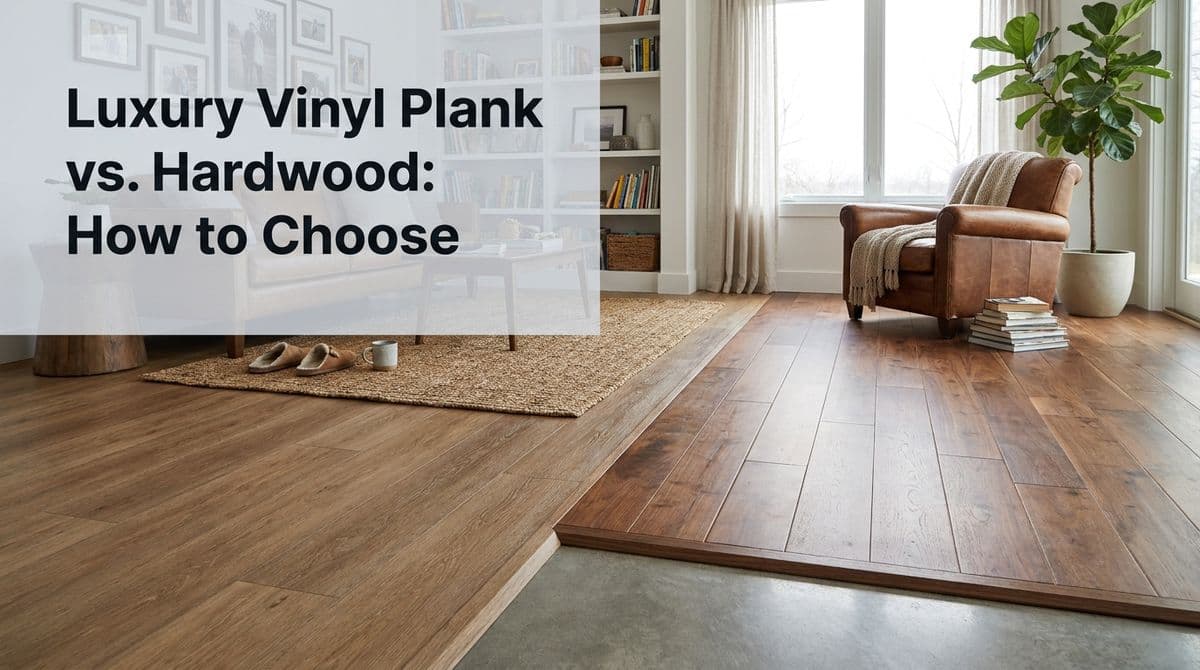
Luxury Vinyl Plank vs. Hardwood: What We Tell Homeowners
We recently got a call from a homeowner — let’s call him Brian — who lives in Rancho. Brian had been browsing our website and saw our wood and vinyl options. He said, “I think I’m looking at that wood vinyl… is that what you recommend?”
We knew right away he was talking about luxury vinyl plank (LVP). On the call, we walked him through how it compares to real hardwood, when we recommend each one, and what makes the most sense for different parts of the home. Since we get this question all the time, we thought we’d share the same breakdown we gave Brian.
What Is Luxury Vinyl Plank, Really?
When we mention luxury vinyl plank, a lot of people picture the old-school sheet vinyl from decades ago. LVP is very different. It’s a layered product designed to look like hardwood but behave more like tile when it comes to water and durability.
On the phone, we explained to Brian that LVP is:
- Waterproof: Great for kitchens, bathrooms, laundry rooms, and entryways.
- Scratch- and wear-resistant: Holds up well to pets, kids, and heavy foot traffic.
- Budget-friendly: Usually less expensive than real hardwood materials and installation.
We told him this is why LVP has been “selling like crazy” in many homes recently — you get the look of wood without babying your floors.
Pros and Cons of Luxury Vinyl Plank
Where Luxury Vinyl Plank Shines
When we visit homes, we often recommend LVP in spaces where life gets a little messy. For example:
- Busy kitchens where spills and dropped pans are part of everyday life.
- Bathrooms where moisture and humidity would quickly damage real wood.
- Basements that might see occasional moisture issues.
- Rental properties where durability and easy turnover clean-ups are a priority.
We explained to Brian that LVP can handle water sitting on the surface for a while without swelling, and it won’t usually show scratches from dog nails or moving chairs the way softer woods can.
Downsides of Luxury Vinyl Plank
We’re always honest about the trade-offs. LVP has some cons homeowners should know:
- It doesn’t add value like real wood: It looks great but won’t boost resale the same way solid hardwood often does.
- Harder to repair in small spots: Usually, we replace a plank rather than refinishing.
- Not a natural material: Some homeowners simply prefer the feel and warmth of real wood.
We told Brian that if he’s thinking long-term investment and classic character, we need to talk seriously about hardwood as well.
Pros and Cons of Hardwood Flooring
Why Homeowners Still Love Real Wood
Hardwood is timeless for a reason. When we bring hardwood samples into a customer’s home, like we offered to do for Brian, most people can see and feel the difference right away.
Here’s what we highlighted for him:
- Natural beauty: Every board is unique, with real grain and character.
- Refinishable: Scratches, wear, or a dated stain color can often be fixed by sanding and refinishing.
- Long-term value: Quality wood floors can last for decades and are attractive to future buyers.
We often see hardwood shine in living rooms, dining rooms, and bedrooms where moisture is less of a concern and homeowners want a warm, classic look.
Where Hardwood Struggles
We also went over where hardwood is not ideal:
- Moisture: Kitchens, bathrooms, and laundry rooms can be risky; spills and leaks can warp or stain the wood.
- Scratches and dents: High heels, pet claws, and heavy furniture can leave marks, especially on softer species.
- Higher upfront cost: Both the material and the installation are typically more expensive than LVP.
With Brian, we talked about his lifestyle. If he had big dogs racing through a narrow hallway or young kids rolling toys across the floor, we’d want to think carefully about which rooms really make sense for hardwood.
Installation and Comfort: What to Expect
Installation Differences
On the call, Brian also asked about how the installation works. Here’s the simple version we shared:
- LVP often uses a “floating floor” system that clicks together. It can go over many existing floors with proper prep, which keeps labor costs down.
- Hardwood usually needs to be nailed or glued down, and the subfloor must be properly prepared and leveled.
We explained that hardwood jobs can sometimes take a little longer and may involve more sanding, dust, and finishing time, especially if we’re staining on site. LVP installations are typically faster and less disruptive.
Comfort and Sound
We also tell homeowners to think about how the floor feels and sounds underfoot:
- Hardwood has a solid, warm feel, especially with a good underlayment. It can slightly improve acoustics but will still transmit sound between levels.
- LVP can feel a bit firmer or cooler, though a quality underlayment helps with comfort and sound absorption.
In a two-story home, for example, we might recommend LVP with a sound-reducing underlayment upstairs if noise transfer is a concern.
Maintenance: Daily Life With Each Floor
Taking Care of Luxury Vinyl Plank
We reassured Brian that LVP is pretty low-maintenance, and that’s a big reason many families choose it. Our main tips:
- Sweep or vacuum regularly with a hard-floor setting.
- Mop with a damp (not soaking) mop and a cleaner approved for vinyl.
- Use felt pads under furniture legs to prevent scuffs.
- Wipe spills promptly, even though the material is waterproof, to keep the floor looking new.
Taking Care of Hardwood
Hardwood needs a bit more attention, but the payoff is worth it for many homeowners. We usually recommend:
- Using a dry dust mop or vacuum designed for hardwood.
- Avoiding excessive water — use a slightly damp mop and wood-safe cleaner.
- Adding rugs in entryways and high-traffic areas.
- Planning for refinishing every so often, depending on wear and tear.
We told Brian that if he loves the idea of a floor that can be refreshed instead of replaced, hardwood is hard to beat.
How We Help You Choose the Right Flooring
By the end of our conversation, Brian said he wanted to talk it over with his wife and then have us bring samples to their home. That’s usually where everything clicks. Seeing your actual lighting, your furniture, and your layout makes the decision much easier.
When we come out with samples, here’s what we walk through together:
- Which rooms see the most moisture and traffic.
- Pets, kids, and lifestyle details that affect durability needs.
- Budget and how long you plan to stay in the home.
- Resale goals if you might sell in the next few years.
Sometimes the best answer isn’t “LVP or hardwood everywhere,” but a mix: LVP in moisture-prone areas and hardwood in main living spaces and bedrooms. We help you balance beauty, durability, and budget so you feel confident in your choice.
If you’re wrestling with the same questions Brian had, we’re happy to bring flooring samples directly to your home and walk you through the options step by step.